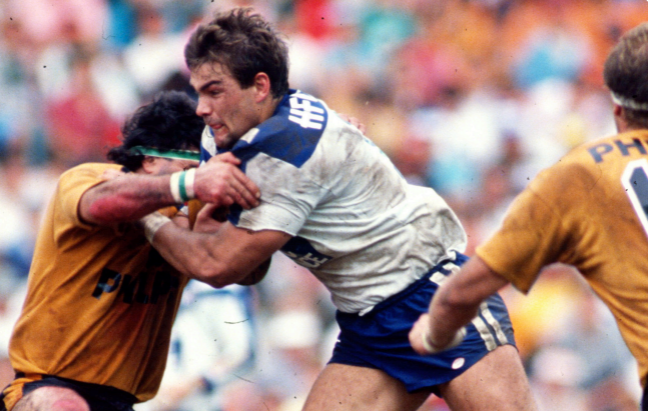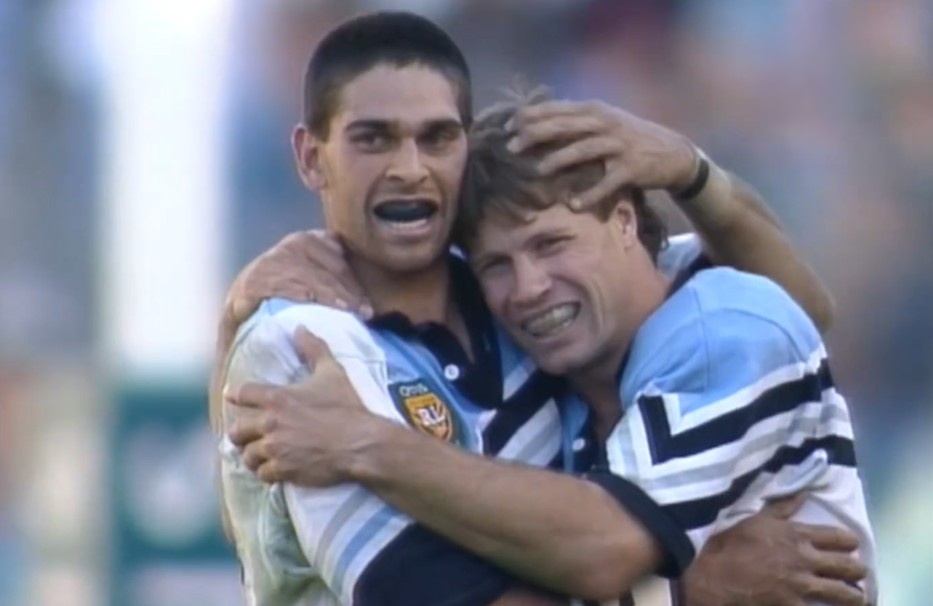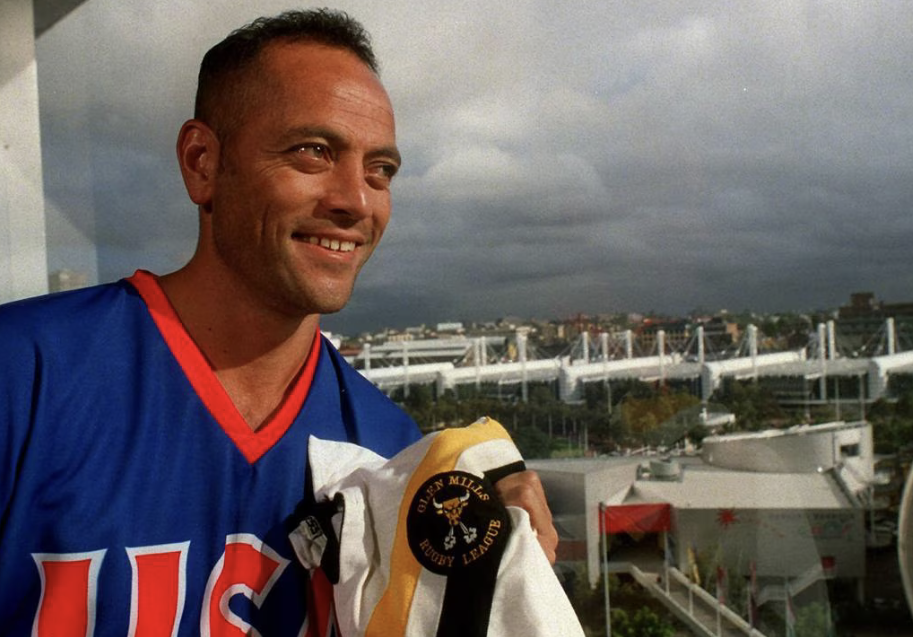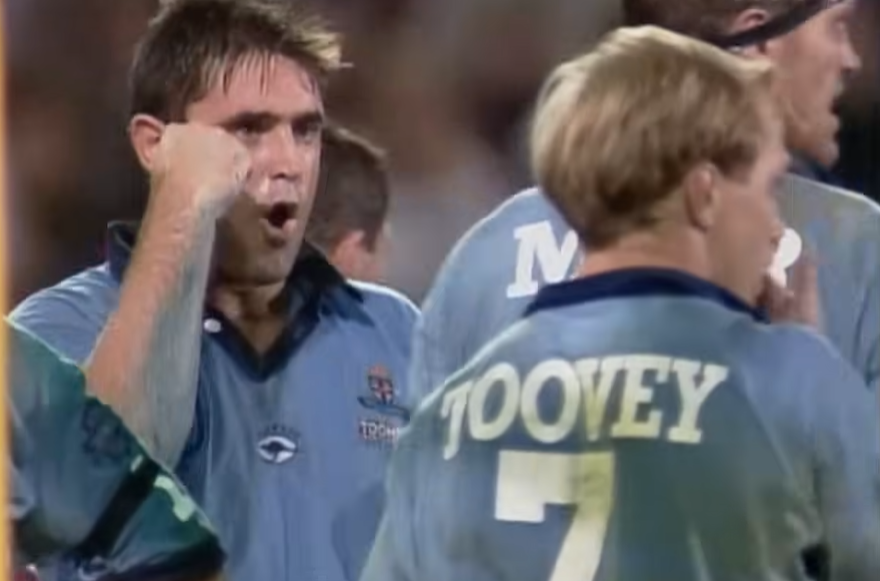
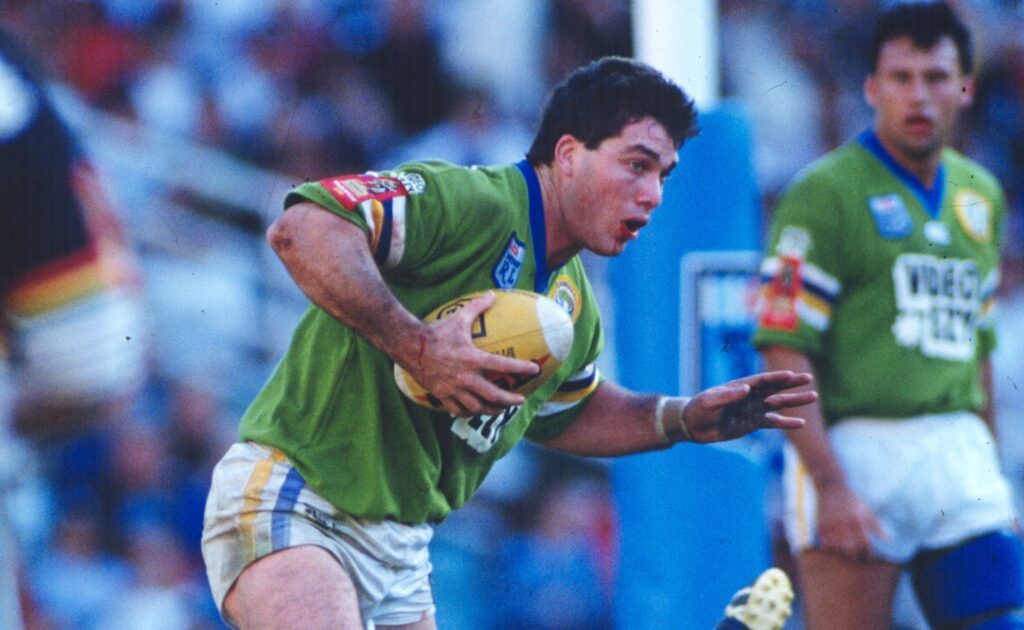

An all-time great in the back-row for Canberra, NSW and Australia, Bradley Clyde was widely regarded as the prototype for the modern-day footballer – and as he tells Big League, he has transferred his rugby league lessons to the corporate world.
BRADLEY, YOU’RE THE EXECUTIVE MANAGER OF STRATEGIC PARTNERSHIPS WITH CHANDLER – HOW DID YOU GET INTO THIS INDUSTRY?
I needed to be available on weekends to look after my kids, I’ve got two girls and a boy. I left the Bulldogs as football manager in 2008, I’d been studying an MBA and wanted to utilise those skills.
So I stepped into sales and marketing with Chandler. It’s what I’ve been used to, the environment of having a scoreboard dictate your performance. I’m now a part-owner at Chandler.
SO YOU’VE TRANSFERRED YOUR COMPETITIVE STREAK FROM YOUR RUGBY LEAGUE CAREER TO THIS SPHERE?
It’s exactly the same to me. It’s a different environment, but there are still targets and you need motivation, you need to be driven and organised.
Being able to adapt to different environments is really important for athletes. For me, it was relatively seamless because I was really looking forward to another challenge.
I really enjoyed my footy and I was so in love with the game, but by the time I retired I was ready for something else.
YOU GREW UP NEAR THE FAMED ‘BARASSI LINE’ AND EXCELLED IN BOTH CODES GROWINg UP. HOW DID RUGBY LEAGUE WIN OUT OVER AFL?
I loved both and Dad was the AFL coach, but I made the Australian Schoolboys so I thought I could carve out a career in rugby league.
The Raiders came along in 1982 and provided that tangible pathway where I could play first grade and still live at home with mum’s cooking.
I used Wayne Pearce as a role model, he prepared his body like no one else in the game. At the same time, I loved the skilfulness and footy brains of Brett Kenny.
IN 1989 YOU DEBUTED FOR NSW AND AUSTRALIA, AND WON THE CHURCHILL MEDAL IN ARGUABLY THE GREATEST GRAND FINAL EVER – ALL AT 19 YEARS OLD. DID IT REGISTER THEN HOW EXTRAORDINARY THOSE ACHIEVEMENTS WERE?
No, not at all, you don’t realise how privileged you were. I just assumed that this is the game and this is always going to happen.
I was probably more of a utility player doing what the team needed until I found a home at lock in 1989.
With Tim Sheens’ coaching, he allowed me to have that roving role.
REALITY HIT WITH AN ACL INJURY THAT RULED YOU OUT OF A GRAND FINAL AND A KANGAROO TOUR IN 1990. HOW DID YOU COPE WITH YOUR FIRST MAJOR SETBACK?
I’d been selected to play for Australia against France and we’d gone into camp after I played at North Sydney Oval.
My knee was a bit swollen and I was diagnosed by (Dr.) Nathan Gibbs on the table at the medical.
I can remember tears running down my face as I was going into surgery. Here I was, a grown man, but I was just so disappointed.
HOW MUCH OF A RELIEF WAS IT TO SHAKE OFF SEVERAL INJURY-HAMPERED YEARS IN 1994, TICKING OFF THE BOXES OF ANOTHER PREMIERSHIP AND A KANGAROO TOUR?
I was really keen to play as much footy as possible in 1994 and listened to Tim Sheens, who tried to curb my ways in how I played, trying to get some longevity out of my game.
The Kangaroo Tour was pretty magical for a young person at 24, touring England and France with a bunch of good friends. What could possibly go wrong?
AT JUST 21 YOU WERE AUSTRALIA’S VICE-CAPTAIN FOR THE 1991 TOUR OF PAPUA NEW GUINEA, BUT YOU TURNED DOWN THE NSW CAPTAINCY THE FOLLOWING SEASON. HOW COME?
It was a huge honour to be asked to captain NSW, being so young.
But I had so many other leaders around me and I hadn’t developed those skills as much I would have liked, so I didn’t feel comfortable leading some of the more senior players and I ended up turning it down.
I spoke to my father and I was comfortable with it then.
But I now know that I probably should have, no matter what the circumstances, ran with it and developed those skills on the run.
Because it’s a huge honour and it can help shape you as a young person.
DID IT TAKE A TOLL ON YOU BEING SOMETHING OF A FIGUREHEAD AND SPOKESPERSON FOR SUPER LEAGUE AT A RELATIVELY YOUNG AGE?
I look at that part of my life and understand that it was an absolute privilege to be a part of the transition to the game being fully professional.
Early in the piece, I made the decision to play with the Raiders and stick with Super League because I was a Canberran.
It was a relatively easy decision for me because we were winning football games.
It fractured the game and if there is any future learnings from it, it should never impact the actual game. It should be decided in the boardroom
But to be involved at a senior level during that period, being introduced to News Limited and the way they operate, that influence has really helped the game transition.
The relationships with some national and multinational corporations have catapulted our game into a new stratosphere.
The game is really quite healthy, I think, on the back of some important decisions and the evolution of
our game.
WAS PARTING WAYS WITH THE RAIDERS IN 1998 THE HARDEST PART OF YOUR CAREER?
Yes, I’d always considered myself a one-club player. Unfortunately, the Raiders had another point of view and I was asked to leave.
I was fortunate that I went to the same club as ‘Sticky’ (Ricky Stuart), the Bulldogs. One door closes and another opens.
I believe in fate, that some things are just meant to happen.
I had a young family and consequently my kids have grown up in Sydney and they love it. It’s been good for them.
YOUR POST-PLAYING TENURE WITH THE BULLDOGS CAME DURING A SUCCESSFUL BUT TUMULTUOUS PERIOD…
Yeah, it was a really interesting time.
We managed to win in 2004, but there was the salary cap breach and the Coffs Harbour incident.
In terms of crisis management, it helped shape some of my experience as a younger person coming into the administration side of rugby league, and what to do and what not to do.
I soon learnt that if the honesty dial ever deviates, the ramifications are enormous.
AFTER A DECADE OR SO WITH THE RAIDERS AND BULLDOGS, WHERE DO YOUR LOYALTIES LIE? OR DO YOU STILL HAVE A FOOT IN BOTH CAMPS?
I’m truly honoured to have played with both, but the heart is with the Raiders. I grew up there, I’m a Canberran and loved their season last year.