
MICHAEL, CAN YOU TELL US ABOUT THE GREEN PROJECT?
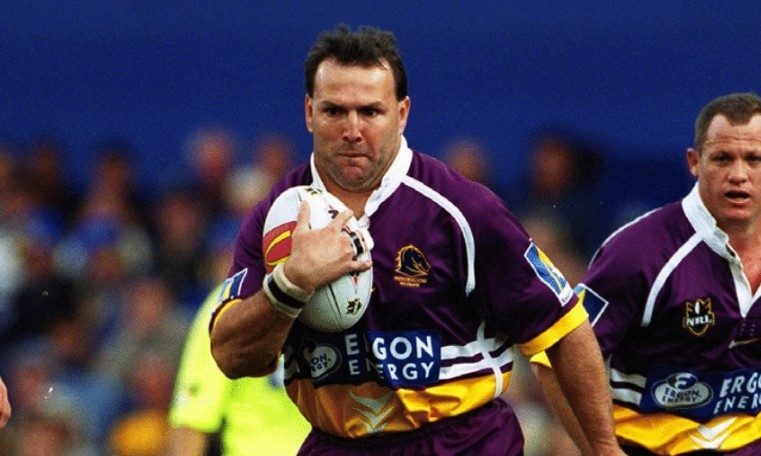
I work for the Broncos but in partnership with the Greenbank Services Club, in what’s now called the Game Development department. There’s a lot of ex-players involved and it gets me working in the Logan district, promoting brands like the Broncos and Greenbank. We travel the countryside, spreading the good word. We’re all about helping, supporting and making the game better, not only on the field, but for kids off the field. We could be using our profiles to raise money which stays at that junior rugby league club, or it could be coaching coaches, or coaching players. Whatever makes the game better, that’s what we’re all about.
SUNCORP STADIUM IS SUCH A SHOWPIECE FOR MAGIC ROUND AND LOOKS A LOT DIFFERENT TO YOUR HEYDAY – DOES IT STILL HARBOUR THE SAME SPIRIT OR ATMOSPHERE AS THE GROUND YOU MADE YOUR FIRST-GRADE AND ORIGIN DEBUTS AT?
It’s still the same. The name’s changed and the ground’s changed, but it still has that same effect for Queenslanders when they play there, Australia when they play there. It’s a little different in club football because everyone loves to play at Suncorp. [The Broncos] try to make it our home and our fortress, but it’s such a great stadium and the atmosphere is fantastic so it doesn’t hold the same effect as 4 Pines Park, Campbelltown or Mount Smart, for example.
DO YOU HAVE A STANDOUT MEMORY OF THE OLD LANG PARK?
Probably before I started playing Origin, when Wally (Lewis) got sin-binned [in 1988] and the crowd threw beer cans onto the field. They had to stop the game to pick up the cans … I’m going, ‘What a waste!’, number one, but just that support for Wally – and they were giving it to Mick Stone, the referee.
And I have great memories of the first Origin match [in 1980] thinking, ‘Boy, I’d like to play that one day’. It was a fairytale back then, but getting the opportunity to do that … it’s really hard to put into words what it means. When you’re playing for the Broncos or Australia, you’ve just got a number. But Origin was the only time you got to put your family name on the back of your jersey. It was a special moment.
YOU WERE PLUCKED FROM STANTHORPE – AND AFTER STARRING FOR TOOWOOMBA IN THE STATE LEAGUE – TO BE PART OF THE BRONCOS’ INAUGURAL SQUAD AT JUST 18. DID YOU ANTICIPATE FORCING YOUR WAY INTO THAT FIRST LINE-UP, LET ALONE PLAYING JUST ABOUT EVERY MATCH IN 1988?
I think I was in the right place at the right time. Now we have all these junior academies and development squads to be part of our system. But in those early days, it was just a chance. I obviously showed enough to Wayne (Bennett) in the trials to warrant giving me a position on the wing. We had some fantastic players: Wally, Gene Miles, Greg Conescu, Sam Backo, Peter Jackson, Allan Langer, Joey Kilroy, Colin Scott, but they were a lot older than me. I just had to try to earn the respect of those senior players, show what I was capable of doing over time and win them over with the way I played.
TALKING TO MEMBERS OF THE BRONCOS’ 1992 SIDE, THE OVERWHELMING MEMORY SEEMS TO BE THE SENSE OF RELIEF AT WINNING THE PREMIERSHIP. WAS THAT HOW IT FELT FOR YOU?
When you look at the sporting landscape in Queensland, we had the Bears [in the AFL] who then turned into the Lions, but they were unsuccessful at the time. We had the Queensland Bulls cricket team, who had never won the Sheffield Shield in over 100 years. People put a lot of faith and support around our team – and we nearly had the Queensland [Origin] team there at certain stages, so there was a lot of expectation. There was a lot of pressure, from within and on the outside: sponsors, fans, supporters, the newspapers. It was just a big relief that the pressure had been released.
It was a bit of a shame Wally and ‘Geno’ weren’t still there – winning a grand final would have been a great way to finish their careers – but Wayne had to make the tough decisions. The club brought in Glenn Lazarus and Trevor Gillmeister, to strengthen those forward positions. ‘Alf’ (Langer) was just a superstar, a great leader by his actions and everyone would follow. We had great camaraderie, a lot of family time away from the rugby league field. When we got on the field, we replicated that. They weren’t just my teammates – they were my friends and I didn’t want to let them down. Everyone felt the same and that’s why that group was very, very close.
YOU FAMOUSLY STAYED AND FOUGHT FOR YOUR PLACE WHEN THE BRONCOS HAD A BIT OF A CLEANOUT. DID YOU EVER GIVE ANY SERIOUS THOUGHTS TO LEAVING?
Not really. In 1997, Wayne said to a few of us that we were free to go if we wanted to negotiate somewhere else. If we wanted to stay, that was fine. Once upon a time, you’d get an instant start but now you’d just be another number and have to earn your stripes. Willie Carne, Alan Cann and Kerrod Walters left and I decided to stay. I just thought sometimes you need a bit of a crossroad, you need a challenge in your life. I went back and worked a bit harder and changed a couple of things. I was determined to stay and I still thought I had something to give the club. So I stayed and won another couple of grand finals, which was fantastic.
IN THE OLD RUGBY LEAGUE WEEK PLAYERS’ POLL ISSUES, YOU WERE ALWAYS NEAR THE TOP OF THE HARDEST PLAYER TO TACKLE CATEGORY, AS WELL AS THE PLAYER WITH THE SHORTEST FUSE LIST…
That’s just part of the game, isn’t it? I get a lot of people that meet me go, ‘Boy, you’re nothing like when you played’. I thought I had to be angry to play. As I matured, I calmed down a little bit and enjoyed my football. The shortest fuse part, yeah, I got a bit angry at certain stages – but the hardest player to tackle, that was something I cherished. I always tried to do something that would make my teammate’s run after me a lot easier. I would strive to make one centimetre; if I could fight for that one centimetre, someone else didn’t have to fight for that.
WHO DID YOU FIND IT MOST CHALLENGING TO PLAY AGAINST?
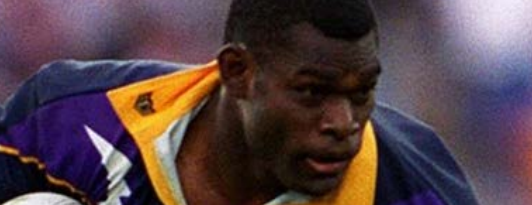
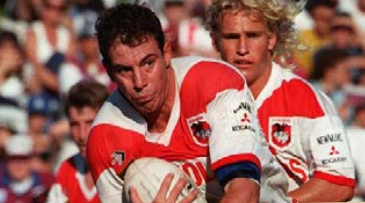
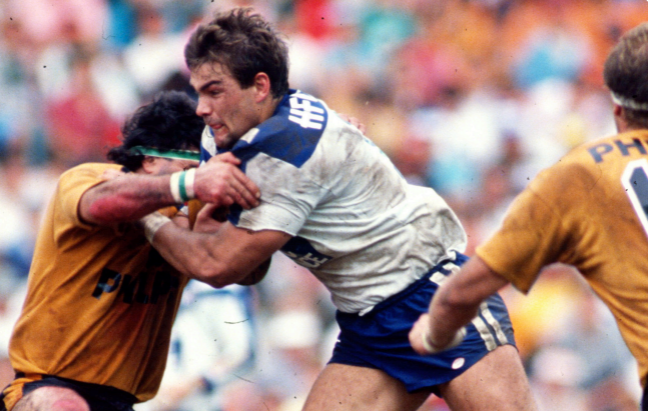
Rod Wishart, we had a lot of contests, and ‘ET’ (Andrew Ettingshausen) jumped on the wing sometimes – he was a lot faster than me. Andrew Farrar, I always had a run-in with him, he played in the centres and he’d bite, spit, gouge, or whatever he could to intimidate me. Eric Grothe and Kerry Boustead were on the other side to me, so I never really had contests against them. The guy that I would change sides to face was Martin Offiah – I knew he was that quick, but strength-wise I knew I had it over him. I had a lot more footwork than him. I would always beat him and get around him, but in the next five metres he’d pick me up and tackle me. I always wanted that challenge of playing against the best.
THE WINGER’S CRAFT IS SO DIFFERENT THESE DAYS – IS THERE ANY TODAY YOU ESPECIALLY ENJOY WATCHING?
Xavier Coates, I was lucky enough to present his first Broncos jersey to him. Some of the tries he scores are beyond belief. These guys, their athleticism and how they score these tries, it is pretty to watch.
DATE OF BIRTH
21 October, 1969
CURRENT AGE
56
BIRTHPLACE
Stanthorpe, Queensland
POSITIONS
Wing, centre
PLAYING HISTORY
1988-2000: Brisbane Broncos
2001-01: Salford
REP FOOTBALL
1989-96: Queensland
1989-94: Australia
1997: Super League Queensland
JUNIOR CLUB
Stanthorpe Gremlins
TOTAL NRL MATCHES
274
TRIES | POINTS
120 | 484