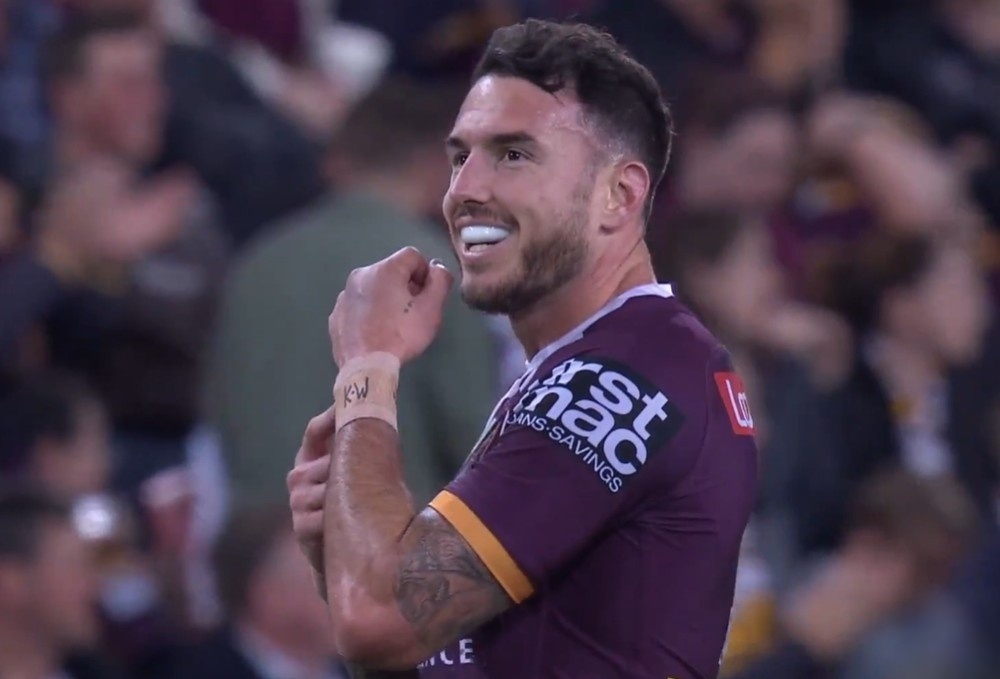

DARIUS, CAN YOU TELL US ABOUT DB1 – THE INSPIRATION BEHIND IT AND WHAT YOU PROVIDE?
It’s something I’ve been doing since my own trouble with mental health and wellbeing, during my career in 2014, 2015, going through some challenging experiences. I wanted to give back and help others – like others did for me. That’s where it started. It was really small, getting out to junior rugby league clubs, schools and small events, where I could share my story and help others in their wellbeing journey.
Since retiring, I’ve had more opportunity to get to community events, all different places, to share my journey around positive wellbeing and mental health. What it looks like, support networks you have to have in place, key strategies to be the best version of yourself. It’s something I’m really passionate about and a big part of my work-life balance.
YOUR PROFILE MUST HELP NORMALISE THE CONVERSATION AROUND MENTAL HEALTH AND HELP CREATE A FORUM FOR PEOPLE TO TALK MORE OPENLY?
Yeah, I think so. [Mental health] is something that doesn’t discriminate; it doesn’t matter what industry, what success you’ve had or the perception of that success is. It’s something that everyone battles through: mindset, resilience, wellbeing, work-life balance – all those things go hand in hand. If you’re doing things you enjoy, you have purpose in life, you have people that love and care about you, and you do your best to stick to your values and beliefs, then you’re on the right track.
WHAT DOES YOUR COMMUNITY AND COACHING ROLES WITH THE BRONCOS ENTAIL?
It’s a couple of days a week with the Broncos community team, so it’s different school events and other opportunities as an ambassador and doing things in the community.From school programmes to hospital visits and of that nature. And I’m doing a bit of coaching with the Broncos’ under-21 team at the moment, so I’m really enjoying those roles where I get to do a few different things to make up my daily and weekly routine. It gives me a lot of balance.
YOU’RE THE QUEENSLAND UNDER-19s COACH AS WELL – HOW GOOD WAS YOUR WIN LAST MONTH?
I really enjoyed coaching those young guys. I had some pretty important coaches in my later school years and early adult years, obviously Wayne Bennett when I went to the Broncos, so I think you have a big responsibility. It’s a big opportunity when you’re coaching young men, not just to coach them in rugby league, but to help them with life in general through some challenges and changes, being resilient and all the things that come with high-profile, high-pressure sports.
It’s obviously more enjoyable when you get the result. You see what it means for so many people – not just their families and the players themselves, but the staff, their communities and anyone that’s been a part of their journey.
WHEN YOU WERE THEIR AGE YOU WERE DEBUTING FOR THE BRONCOS, WINNING A GRAND FINAL IN YOUR ROOKIE YEAR. HOW DID YOU ADJUST AS SUCH A YOUNG BLOKE?
It was a bit of a whirlwind – I didn’t really expect it. NRL was the dream, playing for the Broncos was always the goal as a young kid from the Gold Coast. You’re never sure if you’re going to achieve it, then you achieve it and the goalposts keep moving. You want to be consistent, you want to stay there, play every game, you want to obviously win a grand final, play State of Origin.
Luckily for me, a couple of those goals came really, really quickly. It wasn’t probably until a year or two after that I had to pinch myself, but also set some standards and expectations around being better and more consistent. Because if you’re not, you can lose those jerseys pretty quickly.
YOU HAD A VERY SUCCESSFUL THREE-YEAR STINT AT THE DRAGONS, WINNING THE CHURCHILL MEDAL IN WHAT REMAINS THE RED V’S ONLY PREMIERSHIP WIN IN THE PAST 47 YEARS. WHERE DOES THAT ACHIEVEMENT RANK?
It’s one of my proudest moments. I didn’t realise until I got there how big the support for the Dragons was – and when we were successful, they were right behind us. Sixteen years later, I live in Queensland now and there’s still Dragons supporters that come and thank me for being a part of that drought-breaking premiership.
THERE WERE SOME TOUGH TIMES ON AND OFF THE FIELD DURING YOUR THREE YEARS IN NEWCASTLE. HOW DO YOU REFLECT ON THAT TIME NOW?
Definitely positively. While they weren’t as successful on the field, it helped me grow and learn a lot about myself off the field, which was more important than all those football achievements. Not making the finals for the first time [in 2012] made me look within more, think about how I was handling myself outside of rugby league as a person and what was important.
I needed to have a break from rugby league and figure myself out. Going to a mental health facility in 2014 while I was still at Newcastle, at the time it was challenging, but also eye-opening and I had to hold some accountability for my actions, for the person I was and, more importantly, who I wanted to be in the future.
YOU’VE BEEN SUCH A WONDERFUL CAMPAIGNER FOR MENTAL HEALTH, USING YOUR TOUGHEST EXPERIENCES TO HELP OTHERS. WAS BARING YOUR SOUL SO PUBLICLY PART OF THE HEALING PROCESS FOR YOU?
Yeah, definitely. I was a pretty shy, introverted kid and got an opportunity to play NRL at 18, coming into this world that’s probably quite unrealistic. Rugby league is its own little bubble and sometimes you get stuck in it. I got wrapped up in it and didn’t realise I had to learn all the things to be an adult in society and in the community. [It masked] things for a long time and it wasn’t until I got to Newcastle and had some challenges where I had to really sort out those demons – speak about them, own them and move forward. Be more accountable, be a bit vulnerable, share and let the support help me get to where I needed to get to. I’ve been doing that ever since.
I’m just trying to be the best version of me and help others along the way. I’ve got four young kids now, a wife and family that I want to support, guide and help in their journey. Now with community and coaching roles in rugby league and other things, I’ve got a great opportunity to give back like some did to me.
IT’S THE ORIGIN DECIDER NEXT WEEK. YOUR RECORD IN THAT ARENA – 28 CONSECUTIVE MATCHES, THE SECOND-MOST TRIES (17) AND NINE SERIES WINS – WILL STAND THE TEST OF TIME. HOW SATISFYING IS THAT TO LOOK BACK ON?
I was pretty fortunate to come across an era with Mal Meninga as coach and some of the [future] Immortals we had. I’m very proud of those achievements and being a part of that historic run. I’m really proud and excited for Queensland to watch Billy (Slater) and the team go around the last few years and the success that they’ve had. Year in, year out, rugby league and Origin specifically just seems to get bigger and better – it’s really exciting to be a Queenslander at the moment.
THE BRONCOS ARE GOING THROUG A ROUGH PATCH AT THE MOMENT. CAN YOU SEE ANY SIMILAR TRAITS TO THE DIFFICULT 2007 SEASON YOU WERE A PART OF AS DEFENDING PREMIERS?
That’s a good question, I hadn’t really thought about it. After winning a premiership, you’re the hunted. I think Brisbane was definitely the hunted. Everyone loves playing the Broncos, albeit more so after a premiership season. [Like us in 2007], they’ve had some injuries and their fair share of bad luck. While it’s not looking great at the moment, I think their best performance in a while was against the Roosters, so they should take some confidence out of that. Sometimes you’re only one win away from going on a run, as they did last year. With that talented squad, I wouldn’t be writing them off.
DATE OF BIRTH
17 July, 1987
CURRENT AGE
38
BIRTHPLACE
Brisbane, Queensland
POSITIONS
Wing, fullback, centre, five-eighth
PLAYING HISTORY
2006-08, 2015-20: Brisbane Broncos
2009-11: St George Illawarra Dragons
2012-14: Newcastle Knights
REP FOOTBALL
2008-17: Queensland
2008-17: Australia
JUNIOR CLUB
Mudgereeba Redbacks
TOTAL NRL MATCHES
337
TRIES | POINTS
87 | 348