
DAVID, IT’S BEEN MORE THAN 30 YEARS SINCE YOU LEFT ST GEORGE FOR PHILADELPHIA – WHAT’S BEEN KEEPING YOU BUSY LATELY?
It’s been a fun journey helping develop rugby league and being involved in rugby union [in the United States]. For about five years I’ve been developing American football in China, then up until September last year I was involved with a fencing organisation, developing Olympians, World Cup athletes, college athletes, high school athletes. And since its inception, I’ve been helping and consulting with the NRL for the event in Vegas.
I was partnered with a business associate, Jon Prusmark of United World Sports. They had the licence to the World Rugby Sevens stop in the US that originally was in Los Angeles, but John brought it to San Diego and then took it into Las Vegas, where it had tremendous success. When the NRL were looking for potential venues, that was one of the locations that we provided information for – the viability with respect to facilities, business support on the ground, economic development with the local tourism authority. It’s been fun getting them involved there and connected to the school districts and business entities, operations and organisations in Vegas that can help them to develop the event and also sustain it.
AFTER BEING AT THE FOREFRONT OF RUGBY LEAGUE IN THE USA FOR SO LONG, THE NRL’S VEGAS VENTURE MUST BRING YOU A LOT OF PERSONAL SATISFACTION?
It’s been fantastic. We’ve always thought of the potential for the game here, and that’s always a long journey for somewhere where the game’s not played. There was no participation or competitions on the ground. It was heavily rugby union when I was starting it here, but now we have the best teams in the NRL, teams from England, women’s teams. I get an opportunity to take my family out there and friends, all the old players that were associated with the US rugby league national team and competitions, we get together and have a big party. ‘Scrum Vegas’ not only brings in all the former players in America, but now it starts to draw in old teammates or friends from across the world who come in for the event. [The Dragons] played this year, so I had a lot of former players come and stop by.
YOUR TOP-LEVEL SPORTING JOURNEY WAS ROOTED IN RUGBY UNION – TELL US A BIT ABOUT THAT.
I grew up in the St George area – my dad’s Fijian, so my full surname is Niumataiwalu, but we just used the abbreviation ‘Niu’. It made it easier … back in the day, there weren’t a lot of Polynesians in Australia. Even though I played a lot of rugby union, we were big fans of rugby league. I was one of eight kids. Playing union on weekends, then when I was at James Cook High School, playing rugby league midweek. Brian Smith was our coach, we had the likes of Jeff Hardy and Geoff Selby; then Brad Mackay and my younger brother, Mark, and Ian Herron, some great players came through that programme. I played rugby union with St George in first grade at 17, then I was lucky enough to play for NSW and got into the Australian 1987 World Cup squad that trained for about six months leading up to it. When they trimmed the squad back, sadly it was myself and Ricky Stuart who got cut. But that whole experience was something to behold, knowing what it looks like now from what it was then: World Cup games at Concord Oval, a suburban ground in Sydney. Oddly enough, I moved to the States and played in the ‘99 [Rugby] World Cup for the USA against Australia.
SO HOW DID YOU END UP WITH THE DRAGONS?
I always thought at some point I would – my best mates were playing rugby league, I spent a lot of time at Kogarah Oval. It was always part of the plan. In 1986, I was lucky enough to win the Rothmans Medal for rugby union and the Dragons came with a real offer to go to rugby league. I still had some goals and aspirations in rugby union, to try and make the Wallabies, so I didn’t go. I spent a season of rugby union at Manly with some great players – Willie Ofahengaue, Glen Ella and Phillip Cox – it was a great way to either crack it in rugby union or know it was the last opportunity before giving rugby league a serious try.
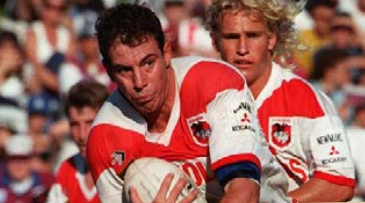
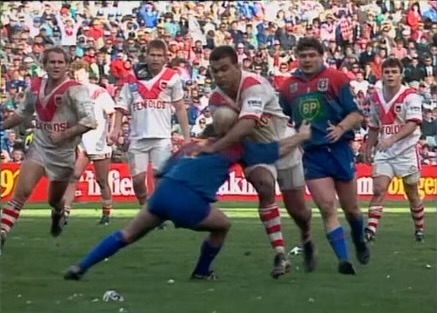
The Dragons approached me again and I spent the 1990-91 seasons with them, then at the end of that ‘91 season I met my wife on an end-of-season trip with St George in Hawaii, believe it or not. One thing led to another – the universe takes you in some interesting directions. When I catch up with my [former Dragons teammates] I say, ‘The best thing that happened to you was I left’. They went to the next two grand finals! It’s a fun thing to laugh about with my kids – they’re like, ‘So you left, moved to the States, and then your team went to two ‘Superbowls’?’. Yeah, they did.
THAT MUST HAVE BEEN STRANGE, BEING ON THE OTHER SIDE OF THE WORLD WHILE THE SAINTS WERE BECOMING A FORCE AGAIN?
Yeah, it was a different time, pre-internet so you couldn’t find any news about rugby league or Australian sport here. I’d have to stay in touch with long-distance phone calls, or someone would send a VHS tape and you’d be able to watch a game three weeks after it was played. So that was an interesting period.
DID YOU EVER CONSIDER COMING BACK TO AUSTRALIA TO PLAY?
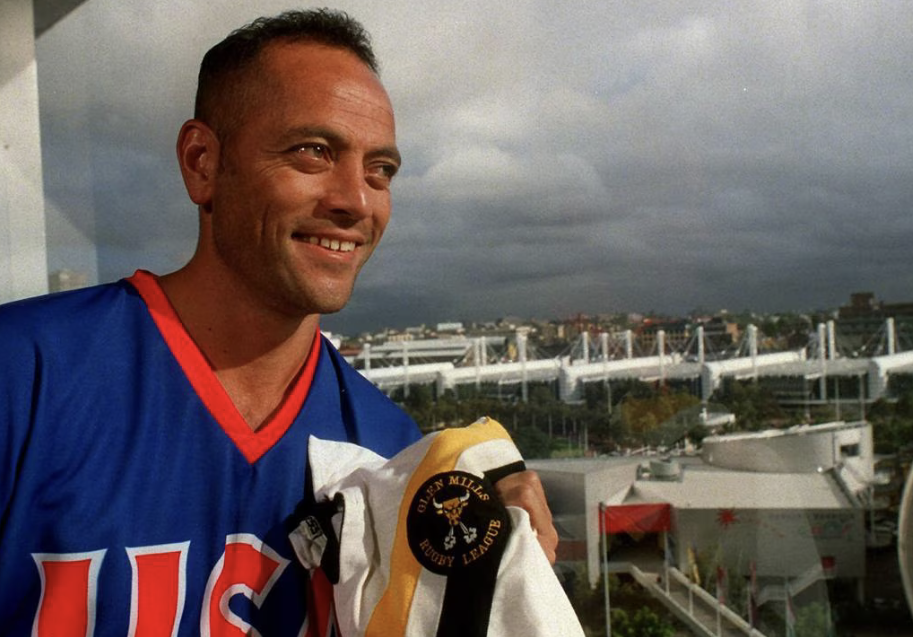
I always love to travel and experience new things, so I took a hiatus from the [St George] contract, came to the States, lived in France and England, then settled in Philadelphia and played a couple of years over here. When I came back for [World] Sevens [with the USA team], the Dragons asked me if I wanted to come back. I thought about it, but I had a young baby and I just didn’t know whether we wanted to make the move back to Sydney. Then I started to do a lot of touring with the USA team, rugby league started to develop here.
I did sign a three-year contract with the Gold Coast, I believe they were called the Seagulls at the time, and we were going to come back. But they had an owner come in, suddenly things changed with him and I saw there were some issues and decided not to do it. That was the end of any serious thought of coming back to play professionally in Australia, but my time in the game down there was unreal. I loved it.
YOU MUST HAVE BEEN IMMENSELY PROUD SEEING USA QUALIFY FOR A WORLD CUP IN 2013 AFTER WHERE YOU’D HELP BUILD THE GAME FROM OVER THE PREVIOUS 20 YEARS?
It was massive. The process of qualification was always challenging. We tried for a number of years and got knocked over by Italy or Lebanon, but we finally got there. Then when we got there, we put together a really strong team with respect to players that could qualify and be eligible. We never really had the resources to do that before. Then to see them beat France in a warm-up game, beat Cook Islands and Wales [in pool play] and qualify for the quarterfinals against the Aussies and end up seventh in the world, that’s pretty significant. That’s something that they all accomplished and will never go away.
DATE OF BIRTH
3 January, 1966
CURRENT AGE
60
BIRTHPLACE
Sydney, NSW
POSITIONS
Halfback, five-eighth
PLAYING HISTORY
1990-91: St George
REP FOOTBALL
1994-2006: United States
TOTAL NRL MATCHES
19
TRIES | POINTS
2 | 10