
TONY, CAN YOU TELL US A BIT ABOUT YOUR VALHALLA MIND PROGRAM?
I call it mental conditioning, and basically the reason I do it is because it was the thing that let me down in my footy career. When I got to about 14 or 15, I was a flatwater rower and I played rugby league. At about 18, I had a choice to go to the Australian Institute of Sport for rowing, or go have a crack at professional rugby league. I chose rugby league because, one, I got into university, but also you get paid.
I had an amazing run playing footy, but looking back on my career, I worked out that I was a great trainer, had a really good foundation in training, got a sports science degree, understood all that side of it. I basically realised that it was my mental capacity – my ability to cope with everything that went with sport – that let me down. There’s a lot more involved in professional sport than just being a great trainer: the team interaction, the players you associate with, the coaching staff, interactions with the fans, the media – it’s all one big ecosystem. If there’s areas where you’re not that confident, it can actually affect your performance. Mental fatigue is probably a bigger thing that’s wearing on players than physical fatigue.
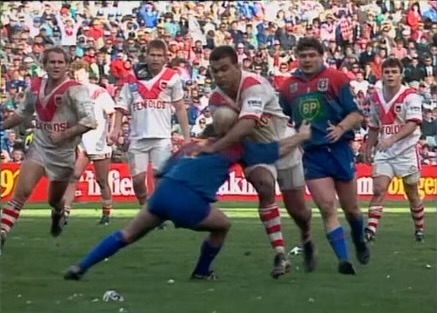
It’s hard to remember the 1992 grand final, I was virtually physically incapable because of how much worry I put into it before I even got there. I was running around on flat legs because I’d played the game in my head way too many times – due to all the things that go with that week, and lack of sleep because of overthinking. That’s why I do what I do now – it’s the probably the most untapped area in sports today for improving performance.
SO IS VALHALLA MIND MOSTLY AIMED AT ATHLETES?
I work with everyone. Corporations, individuals – but athletes are my favourite to work with because it’s somewhere where you can get really concrete gains. One of the weightlifters I’ve worked with, she improved her competition [personal best] by 20 percent. She was dedicated, a Commonwealth Games athlete, but going into competition the mental game was letting her down because of all the doubts about competition and being in the spotlight. That’s what I mean by mental conditioning, we recondition the way people think in dealing with situations
YOU DEBUTED IN THE ST GEORGE FRONT-ROW IN 1990 WITH ONE OF THE GREAT PROPS, CRAIG YOUNG, AS YOUR COACH. AN IDEAL WAY TO ENTER FIRST GRADE?
I mean, my whole dream as a kid was to represent my country in a sport. And then being able to get an opportunity to play with St George – I’m from a town of 3,000 people, Maclean in northern NSW, so just that environment was amazing and having someone like Craig as the first coach.
BRIAN SMITH CAME IN THE FOLLOWING SEASON AND PUT THE CLUB – AND YOUR CAREER – ON AN UPWARD TRAJECTORY…
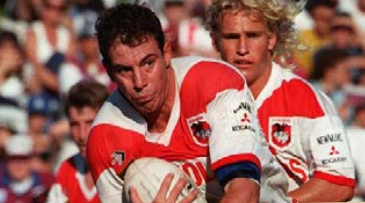
I played most of [1991] off the bench, but getting that combination with the likes of Scott Gourley and David Barnhill, we were changing the way the forward pack was – big, tall, mobile and lean. That’s where Brian Smith came in and changed it a bit. The bigger, more robust front-row was sort of moving out and his style of game was more free-flowing. That suited me for sure.
DO YOU FEEL LIKE ONE OF THE GRAND FINALS YOU LOST TO THE BRONCOS [IN 1992-93] COULD HAVE GONE THE DRAGONS’ WAY WITH A BIT OF LUCK? OR WERE YOUR OPPONENTS ON ANOTHER LEVEL?
Well, in ’92, I think we were happy just to get there. Because it was really unexpected. But in ’93, I think we lost three or four games that season, and the final score in the grand final was 14-6 … I think we could have won it. But the side we were playing against were just able to step up and grow because they had so many of their team playing State of Origin and for Australia. So I think it was the capacity of those players to lift when the game was more important. And coincidentally, that’s what I help people train to do now.
YOU WERE ONE OF ONLY A COUPLE OF DRAGONS TO PLAY EVERY GAME IN THOSE GRAND FINAL SEASONS, DESPITE STILL BEING VERY YOUNG. THAT MUST BE AN ACHIEVEMENT YOU LOOK BACK ON PROUDLY?
When you’re there and you’re in it, you just think that’s normal. It’s really nice when you look back and go, ‘Oh wow, that was actually pretty impressive’. I think I missed two games in five years.
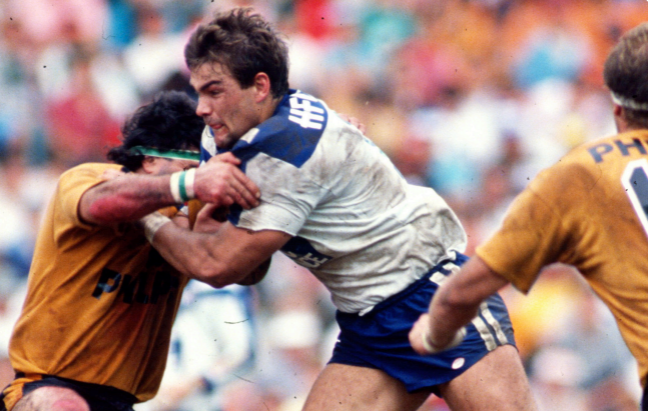
But if you look at how many reserve grade games I played in ’95, that would be an indicator of where I was sitting in the pecking order in Brian Smith’s mind by then – he’s a great coach, but if you’re on his wrong side, you’re on his wrong side. Then I did an ACL, the Super League war came in and I went to Canterbury – most people won’t know I played at Canterbury because I only played three or four reserve grade games there – and did my ACL again.
NEXT YOU SPENT THE 1997 SEASON AT PARIS ST GERMAIN IN THE SUPER LEAGUE – HOW WAS THAT EXPERIENCE, LIVING IN ONE OF THE GREAT CITIES, PLAYING RUGBY LEAGUE IN A TEAM MOSTLY MADE UP OF EXPATS?
I just wish I had the mental capacity that I have now, because I would have been able to deal with it a lot better. The whole team actually lived in a hotel just outside the periphery in Paris. Our training facilities were owned by the Bank of France, and it was just an amazing facility. But a footy team living in a hotel for 12 months, you can imagine the stuff that went on throughout the year in an environment where the restaurant was your kitchen, you’re with your teammates on a constant basis – you were never out of the football environment. It was virtually like being on tour for 12 months.
So it was a very interesting experience in the football world, and from a playing perspective. Peter Mulholland was the coach, which was pretty cool. The comparison is always made: Could our reserve grade teams beat the English teams, and we sort of proved it. We couldn’t. We had four or five French players in the team, and four or five NRL-level players, and then the rest [Australian] reserve grade players. We came second-last.
It wasn’t the most fun season, but I used to think I was really professional so I had my head shoved up my arse and actually didn’t enjoy Paris very much at all. Knowing what I know now, I would have enjoyed myself a shitload more if I had the opportunity again.
THEN YOU BECAME A QUEENSLAND CUP PLAYER ON $200,000…
[Super League] said we’ll just pay you your money. I had to play football somewhere and the only reason I went to Burleigh Bears was because my accountant was the secretary of the club and I thought the Gold Coast would be a good place to have a holiday. I was only going to go there for a year, get my Super League money and then get back to Sydney. Little did I know, I’ve spent the rest of my life on the Gold Coast. We won the premiership [in 1999], then I just went, ‘Okay, that’s enough’, and basically pulled up stumps and retired. I finally got to win a grand final.
DATE OF BIRTH
23 June, 1970
CURRENT AGE
56
BIRTHPLACE
Yamba, NSW
POSITIONS
Prop, second-row
PLAYING HISTORY
1990-95: St George Dragons
1996: Canterbury Bulldogs
1997: Paris St Germain
1998-99: Burleigh Bears
REP FOOTBALL
1992: NSW City Firsts
TOTAL NRL MATCHES
103
TRIES | POINTS
11 | 44